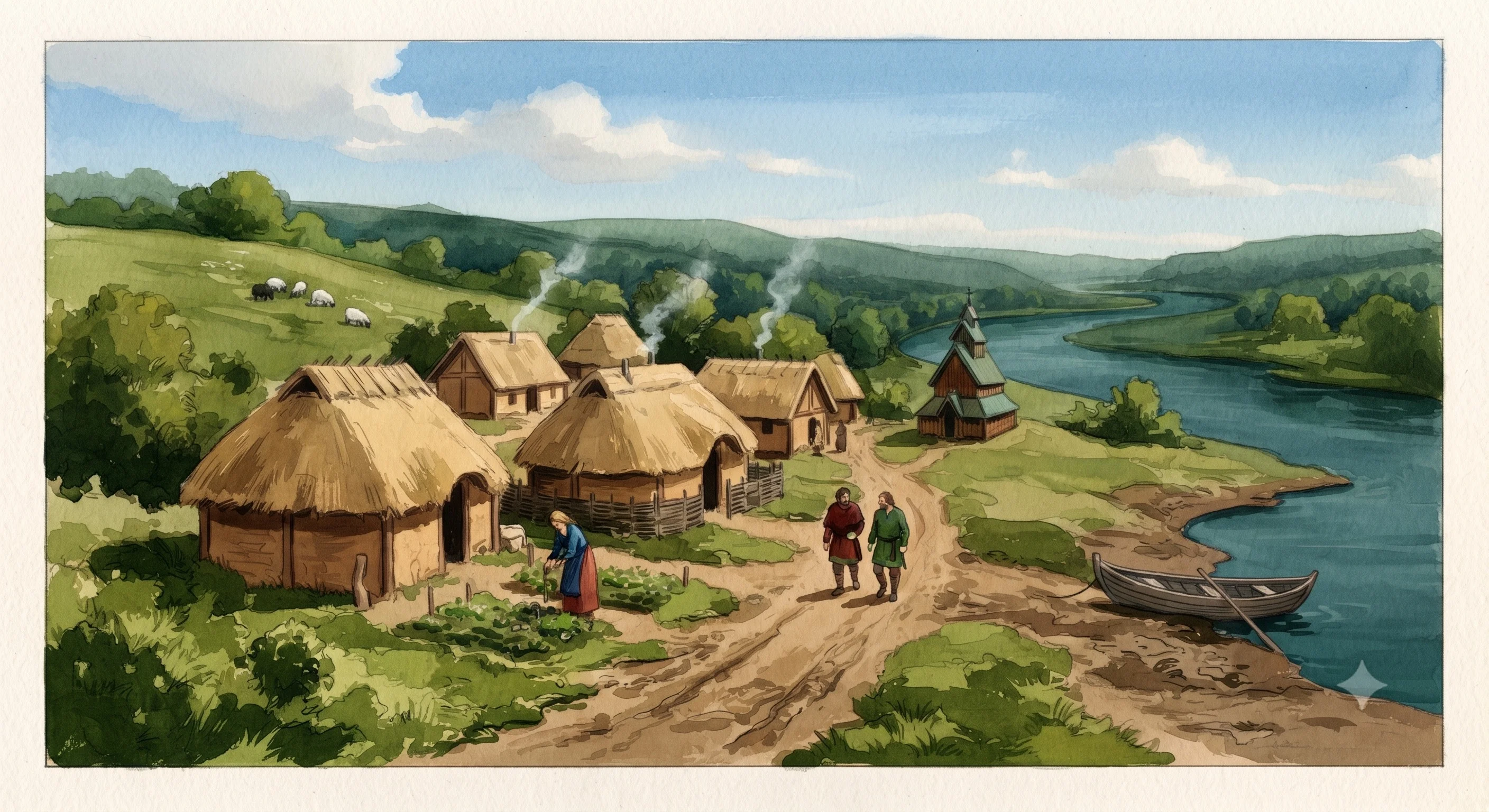
500-599 AD
6th Century AD
500 AD
500 world pop. c. 200 million: Asia: 130, Europe: 30, Africa: 30, America: 10
502 Narsai of Mealletha: Syrian poet, headed Nestorian school @ Nisibis (498)
c500 Codex Sangallensis vg
510 AD
513 Mt. Vesuvius erupts again (79)
516-524 Sigismund: Burgundian King, left Arianism for Roman Catholicism
520 AD
520 Institutionis Grammaticae: Latin grammar by Priscianus of Constantinople
524 Boethius' Consolation of Philosophy
524-532 Godomar: Burgundian King, overrun by Franks
525 Dionysius Exiguus' Easter table created the concept of anno domini • Dionysius Exiguus set Christian calendar (a.d.), Jesus' birth at 1ceDec23
526 major earthquake hits Antioch killing c.250,000
526-530-532-535-536-537 Popes FelixIV-BonifaceII-JohnII-AgapitusI-Silverius
526-534-541 Athalaric - Hildebad: Ostrogoth Kings of Italy
527-565 · Nov 14 Justinianus the Great: Byzantine Emperor, empire reached largest size, persecuted Pagans & Jews; in 529 closed 900 year old Athens Academy of Philosophy; in 529-535 ordered "Corpus juris civilis" compilation of Roman Law by Tribonian; in 532Jan Nika Riot of Blues & Greens; in 533 Belisarius captured N. Africa from Vandals & in 535 began reconquest of Italy; Council of Clermont excluded Jews from public office; in 536Dec9 Belisarius captured Rome, held till 546 when Totila the Ostrogoth King (541-552) starved last c.500 residents into submission; in 537Dec27 dedicated Hagia Sophia; in 538 Council of Orleans required Jews to remain indoors during "Passion Week"; in 540 Persians sacked Antioch & took Syria, Ostrogoths retook Italy; in 542594 plague, *halved* population of Europe!; in 543 condemned Origen, disastrous world earthquakes; in 544 condemned "3 Chapters" of Theodore of Mopsuestia (d.428) & other "2-natures" Christology of Pope Leo's 449 Tome; in 552-554 Narses defeated Ostrogoths & retook Italy; in 552 sent Christian missionaries to China & Ceylon to get silkworm; in 553May-Jul called 2nd Council of Constantinople, 5th Ecumenical; decreed "Theopaschite Formula"
530 AD
530 antipope Dioscorus: was elected but P. Felix IV designated P. Boniface II
536 Climatic event likely due to volcanic activity: crop failures, recording of dim sunlight
537 King Arthur of the Britons killed in Battle of Camlan, myth?
537-555 Pope Vigilius: involved in death of Pope Silverius, conspired with Justinianus & Theodora, in June 547 issued "Iudicatum" supporting Justinianus' anti- "2-natures", excommunicated at Council of Carthage in 550!
540 AD
First recorded bubonic plague (Plague of Justinian) in Constantinople and Byzantine Empire
543 Yu p'ien: Chinese phonetic dictionary using Fan ch'ieh system
546 Codex Fuldensis vg(F): Latin Vulgate, 27NT + Epistle to Laodiceans (c100)
550 AD
St. David converts Wales; crucifix becomes Christian icon
550 Byzantine Greek Orthodox Bible: much smoothing & conflation • St. David converted Wales to Christianity, crucifix became Christian icon • Toltecs invaded Yucatan Peninsula & conquered Teotihuacan civilization
550-1453 Medieval Greek of Constantinople (Byzantium) became standard Greek
556-561 Pope Pelagius I: selected by Justinianus, endorsed "Iudicatum"
558-561,584-629-639 · Jan 9 Clotaire I - Clotaire II - Dagobert I: Frank Kings
c550 Codex Mediolanensis vg(M): Latin Vulgate Gospels • Codex Veronensis: Greek & Old Latin Psalms • "Book of Taliesin": Welsh poems by Taliesin • Codex Claromontanus (Dp): Greek/Latin Pauline Letters, includes Canon of c350: OT,Tobit,Judith,Wisdom,Sirach,1-2-4Macc,Barnabas,Hermas,4 Gospels, Acts,7 Pauline Letters (excludes Philippians & 1-2Thess),1-2Tim,Tit,Acts of Paul,James,1-2Pt,1-3Jn,Jude,Rev,Apocalypse of Peter; "Western" text-type
560 AD
561-574 Pope John III: authorized by Justinianus
565-578-582-602-610 JustinII-TiberiusII-Maurikios-Phocas: Byzantine Emperors
568-774 Lombards invaded Italy, converted to Roman Catholicism in 589
570 AD
571-585-587-592 Bintas - Yomei - Sushun: Japanese Emperors
575-579 Pope Benedict I: authorized by Justin II
579-590-604 · Mar 12 Pope Pelagius II (plague) - Pope Gregory I the Great
580 AD
586-601 Recared: Visigoth King of Spain, in 589 called 3rd Council of Toledo, left Arianism for Roman Catholicism; "Filioque" added to Latin Nicene Creed?
589 The Sui dynasty reunifies northern and southern China after centuries of political division.
589-618 Sui dynasty of China: reunited China, rebuilt Great Wall, Grand Canal, book printing, in 606 standard examinations for public office
c580 Cassiodorus: Roman Senator, founded Monasteries, transl. Greek to Latin
590 AD
Pope Pelagius II dies of plague; Gregory the Great elected
590-628 · Apr 3 Khusrau 2nd: Persian Emperor, in 611-614 captured Antioch, Damascus, Tarsus, Jerusalem, "Holy Cross of Christ", in 619 Egypt; assassinated
592-628 Suiko: Japanese Empress, Sinoization, Shitenno-ji Monastery @ Osaka, Hoko Temple, Shotoku Taishi Law, Horyuji & Hokoji Temples at Nara ...
593 Japan adopts Buddhism
595 1st authenticated record of decimal number system (0-9) appears in India
596 St. Augustine of Canterbury sent to convert England to Roman Catholicism
600-699 AD
7th Century AD
600 AD
600 Babylonian Talmud (Mishnah(Oral Law) + Gemara(Mishnah commentary)); Ashi • Antara ibn Shaddad: 1 of 7 great Islamic poets
601 Ch'ieh yun: Chinese phonetic dictionary of Northern Chinese dialect
604-606-607-615 Popes Sabinian-Boniface III-Boniface IV: authorized by Phocas
605–610 Construction and expansion of the Grand Canal connect the Yellow and Yangtze River systems, integrating the economies of northern and southern China.
606-647 Harsavardhana of Kanauj: reunited northern India
c600 Codex Harleianus vg(Z): Latin Vulgate Gospels • Codex Philoxenian/Harclean Syr(ph/h): Syriac 27NT, "Western" text-type • Vaghbata: Indian medical book compiled
610 AD
610 · (10 Aug) Muhammad's first revelation at Mt. Jabal al-Nour
610-641 Heraclius: Byzantine Emperor, in 627Dec12 defeated Persians @ Nineveh & discovered Indian sugar cane, in 628 recovered "Holy Cross of Christ", in 629 defeated Muslims at Battle of Mu'ta & recovered Jerusalem till 638, in 636Aug15 defeated by Muslims in Syria at Battle of Yarmuk River, in 638 decreed Patriarch Sergius' "Ecthesis" (Monothelites: Christ of 1 will)
613 Muhammad begins preaching
615-618,619-625 Popes Deusdedit-Boniface V: authorized by Heraclius
616 Syro-Hexaplar: Syriac translation of Origen's Hexapla Septuagint (253)
618-907 Tang dynasty of China: included Korea, Manchuria, Mongolia, Tibet and Turkistan • The Tang dynasty presides over an era of cosmopolitan trade, artistic achievement and international cultural exchange.
619 Suan-Ching: "10 Classics", textbooks used for Chinese exams
620 AD
625 Paulinus of Rome began conversion of Northumbria to Roman Catholicism • Brahmagupta: Indian mathematician, taught at Ujjain
625-638 Pope Honorius I: condemned at 6th Ecumenical in 680! (Monothelites)
626-633 King Edwin of Northumbria: founded Edinburgh, advocated R. Catholic.
628-641 Jomei: Japanese Emperor
629–645 The Buddhist monk Xuanzang travels to India, returning with manuscripts that contribute to the development of Chinese Buddhist philosophy.
630 AD
632 7 Jun Death of Muhammad (p.b.u.h); beginning of the Muslim conquest • East Anglia converted to Roman Catholicism, in 635 Wessex, in 636 Ireland
632-634 · Aug 22 Abu Bekr: b.573, 1st Islamic Caliph, capital at Medina
632-651 Yazdigird 3rd: last Sasanian Emperor of Persia, invaded by Islam
634-644 · Nov 4 'Umar: 2nd Islamic Caliph, capital at Damascus, in 634 conquered Syria, in 638 Jerusalem, in 639 Egypt, in 642 Persia; assassinated
635 Christianity of the Church of the East reaches the Tang imperial court, as subsequently recorded on the Xi'an Stele of 781.
640 AD
640 Pope Severinus • Library of Alexandria: "The Center of Western Culture," with 300,000 ancient papyrus scrolls, is completely destroyed.
642 Destruction of the Library of Alexandria
650 AD
660 AD
670 AD
680 AD
690 AD
690–705 Wu Zetian rules as emperor, becoming the only woman formally to assume the imperial title in Chinese history.
700-799 AD
8th Century AD
700 AD
701–762 Life of Li Bai, one of the most influential poets of the Chinese literary tradition.
710 AD
712–770 Life of Du Fu, whose poetry documents the social and political upheavals of the Tang dynasty.
720 AD
c.722 St. Boniface cuts down Thunor's oak
730 AD
740 AD
748 First printed newspaper
750 AD
751 The Battle of Talas between Tang and Abbasid forces marks an important confrontation between Chinese and Islamic power in Central Asia.
755–763 The An Lushan Rebellion devastates the Tang Empire and permanently weakens its central government.
760 AD
770 AD
771 · Dec Charlemagne becomes king of the Franks
772 · Summer Charlemagne destroys the Irminsul
776 Charlemagne ordered the Saxons to be baptized
780 AD
781 Alcuin met Charlemagne
782 Charlemagne ordered the beheading of 4500 prisoners
785 Charlemagne ordered that refusing baptism, offering sacrifice to demons, cremating a body, or eating meat during Lent would be punished by death
790 AD
796 Charlemagne's policy of forced baptism is eased
797 Alcuin is appointed the abbot of Tours. Here his work with the monks developed more contemporary script and books.
800-899 AD
9th Century AD
800 AD
800 Charlemagne crowned Emperor
810 AD
814 Death of Charlemagne
815 Vikings discover Iceland
820 AD
830 AD
830 Establishment of the House of Wisdom in Baghdad
837 Chinese observations document an exceptionally close passage of Halley's Comet.
840 AD
841 Foundation of Dublin by Vikings
845 Emperor Wuzong undertakes a major suppression of Buddhism and other religious institutions.
846 Saracen pirates sailed up the Tiber and sacked St. Peter's and St. Paul's Outside the Walls
850 AD
850-875 Settlement of Iceland by the Norse
860 AD
868 The Diamond Sutra is printed, becoming the earliest surviving complete printed book bearing an explicit date.
870 AD
871 English King Alfred the Great crowned
880 AD
890 AD
900-999 AD
10th Century AD
900 AD
907 Loire Vikings invade Brittany
907–960 The Five Dynasties and Ten Kingdoms period follows the collapse of Tang imperial authority.
910 AD
919 The first use of gunpowder in a conflict at the Battle of Langshan Jiang in China
920 AD
927 Kingdom of England becomes a unified state.
930 AD
940 AD
950 AD
960 AD
960–1279 The Song dynasty oversees a major expansion of commerce, urban life, manufacturing and technological innovation.
970 AD
980 AD
990 AD
1000-1099 AD
11th Century AD
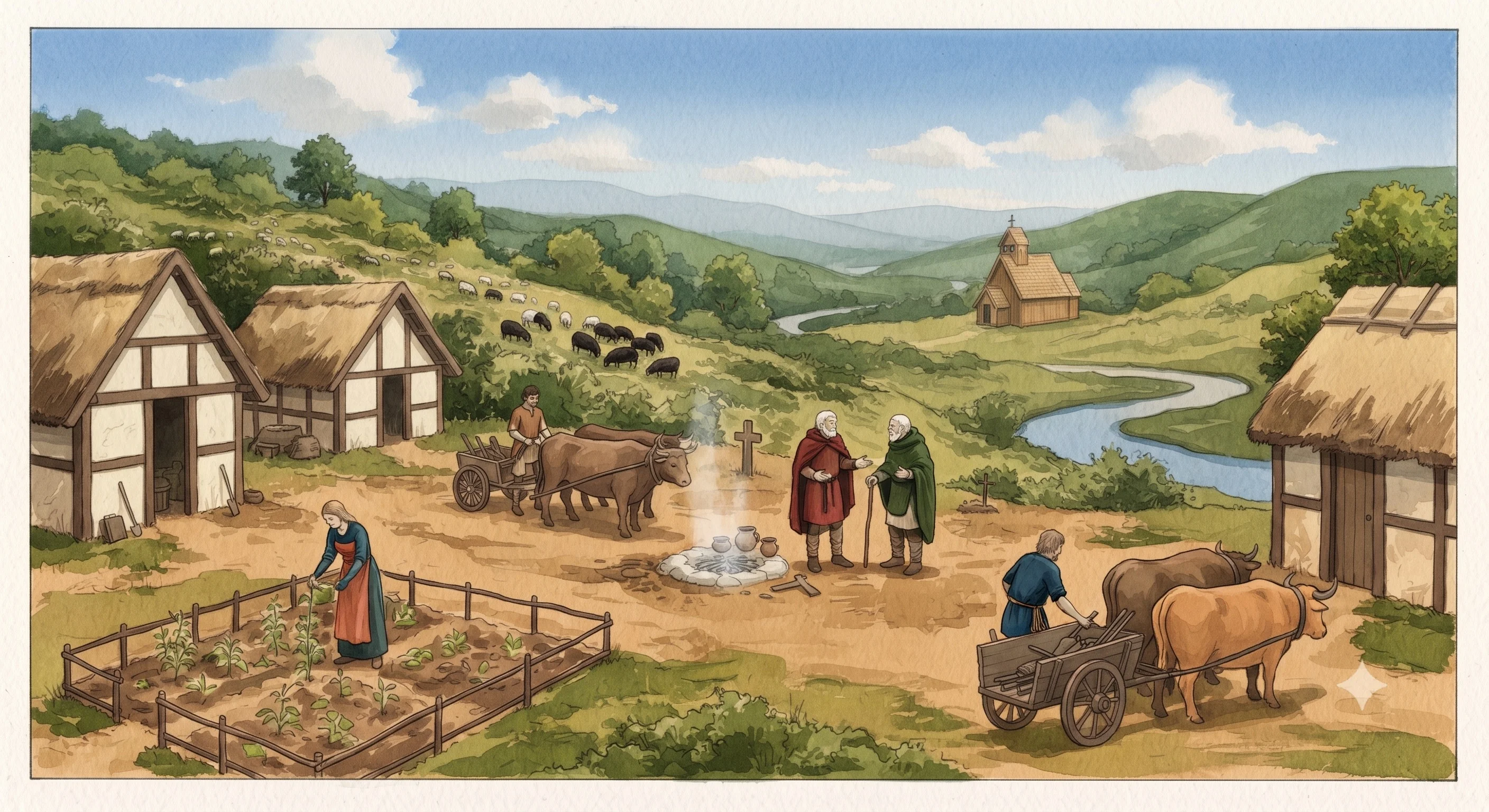
1000 AD
1001-1008 Shikibu's The Tale of Genji
1010 AD
1020 AD
1023 The Song government establishes official paper currency, developing a monetary system based on printed notes.
1030 AD
1040 AD
1044 The Wujing Zongyao, a Chinese military compendium, records early surviving formulas for gunpowder.
c. 1040 Bi Sheng develops movable-type printing using ceramic characters, approximately four centuries before Gutenberg's European printing system.
1050 AD
1054 · Jul 4 Chinese astronomers record a guest star subsequently identified as the supernova that produced the Crab Nebula.
1060 AD
1066 William the Conqueror takes England
1069–76 Wang Anshi introduces extensive fiscal, educational and administrative reforms intended to strengthen the Song state.
1070 AD
1080 AD
1088 Shen Kuo publishes the Dream Pool Essays, documenting observations in astronomy, geology, mathematics and magnetism.
1090 AD
1092 Su Song completes an elaborate astronomical clock tower incorporating mechanical timekeeping and an escapement mechanism.
1095 Pope Urban II launches the First Crusade
1096 First lectures at the University of Oxford
1099 First Crusade's siege of Jerusalem
1100-1199 AD
12th Century AD
1100 AD
1110 AD
1119 Knight's Templar founded • Zhu Yu's Pingzhou Table Talks records the use of the magnetic compass for maritime navigation.
1120 AD
1123 Future priests must be celibates
1127 The Jurchen Jin dynasty captures the Song capital of Kaifeng, forcing the imperial court to relocate southward.
1130 AD
1130–1200 Life of Zhu Xi, whose synthesis of Neo-Confucian philosophy subsequently becomes central to East Asian education and political thought.
1140 AD
1144 Robert of Chester's translation of the Arabic Book of the Composition of Alchemy.
1147-49 Second Crusade
1150 AD
1160 AD
1170 AD
1170 · 29 Dec Murder of Thomas Beckett
1180 AD
1181 Chinese and Japanese astronomers record another guest star, now associated with the Pa 30 supernova remnant.
1185 First record of windmills
1189-1192 Third Crusade (The Knight's Crusade)
1190 AD
1197 Crusade of Henry VI, German Crusade
1200-1299 AD
13th Century AD
1200 AD
1206 Temüjin is proclaimed Genghis Khan, establishing the Mongol Empire.
1209 Francis of Assisi founds the Franciscan Order. Cathar massacre at Béziers & Carcassonne
1210 AD
1215 King John signs Magna Carta
1220 AD
1218-1224 Genghis Khan and the Mongol invasions
1223 The Signoria of Venice is formed
1226 Francis of Assisi dies ae 44 (b. 1182)
1230 AD
1234 The Mongols conquer the Jurchen Jin dynasty in northern China.
1240 AD
1240 At a tournament near Düsseldorf, sixty knights are killed
1245-46 1245-46: First known work of Thomas Aquinas (De fallaciis ad quosdam nobiles artistas)
1247 Death of Robin Hood
1250 AD
1260 AD
1261-63 Aquinas' Summa contra Gentiles
1265 Aquinas begins Summa Theologica
1270 AD
1270s–90s Marco Polo's traditionally accepted travels through Asia and Yuan China contribute to European knowledge of East Asian civilization.
1271–79 Kublai Khan establishes the Yuan dynasty and completes the Mongol conquest of Song China.
1274 · (7 Mar) Thomas Aquinas dies ae 48 (b. 1225)
1280 AD
1280–81 Guo Shoujing and other Yuan astronomers develop the Shoushi calendar, incorporating highly accurate measurements of the solar year.
1290 AD
1291 Siege of Acre
1296 The memoirs of Marco Polo
1300-1399 AD
14th Century AD
1300 AD
1306 Dante Alighieri begins working on The Divine Comedy
1307 · (13 Oct) The arrest of the Templars
1309-1377 The Avignon Papacy
1310 AD
1312 The Knights Templar are disbanded
1313–15 The Yuan government restores imperial examinations, institutionalizing Neo-Confucian interpretations of classical texts.
1315-1317 The Great Famine kills millions in Europe
1320 AD
1320 Dante completes The Divine Comedy
1321 Dante dies ae 56 (b. 1265)
1330 AD
1336 · (26 Apr) Petrarch climbed Mont Ventoux
1337 Edward III of England claims the French throne and begins The Hundred Years War  • Giotto dies ae 70 (b. 1267)
1340 AD
1341 · (8 Apr) Petrarch crowned poet laureate of Rome
1345 Petrarch discovers a collection of Cicero's letters
1346 The Battle of Crécy
1347-1351 The Black Death in Europe
1350 AD
1351–68 The Red Turban rebellions undermine Mongol rule and contribute to the establishment of the Ming dynasty.
1356 Battle of Poitiers
1360 AD
1368 Catherine of Siena has a mystical experience • Zhu Yuanzhang establishes the Ming dynasty, ending Mongol rule over China.
1370 AD
1374 · (19 July) Petrarch dies aged 69
1376 Catherine of Siena is sent by Florence as an ambassador to the Papal States based in Avignon, and while in Avignon Catherine convinces Pope Gregory XI to return to Rome; death of Edward the Black Prince
1377 The Avignon Papacy (begun 1309) comes to an end when Gregory XI moves the papal court back to Rome
1378 Supposed birth of Christian Rosencreuz, founder of the Rosicrucians
1380 AD
1381 Peasants' Revolt in England
1390 AD
1398 King Richard II sentences Henry Bolingbroke to exile for 10 years, interrupting the planned duel against Thomas Mowbray
1399 Henry Bolingbrook's father John of Gaunt dies, and Richard II disherits Henry. Henry rebels and returns to England in summer 1399 to overthrow Richard and become King Henry IV (depicted in Shakespeare's Richard II)
1400-1499 AD
15th Century AD
1400 AD
1403 The Battle of Shrewsbury: Prince Henry gets an arrow in the face in defeat of Henry Hotspur Percy (Shakespeare's Henry IV Part 1)
1405–33 Seven maritime expeditions led by Zheng He establish extensive diplomatic and commercial connections between China, Southeast Asia, India, Arabia and eastern Africa.
1407 Supposed foundation of the Rosicrucian Order
1408 Completion of the Yongle Encyclopedia, an enormous compilation of existing Chinese knowledge and literature.
1410 AD
1413 Henry V ascends to the English throne after the death of Henry IV
1415 The Battle of Agincourt (Shakespeare's Henry V). England occupies north France.
1420 AD
1420 Through the Treaty of Troyes Henry V becomes regent of France and marries Princess Catherine, daughter of French King Charles VI. The son of Charles VI, the Dauphin Charles VII, was disinherited, as Henry V was to gain the French throne at the death of Charles VI
1420–21 The Forbidden City is completed and Beijing becomes the principal capital of Ming China.
1422 Henry V dies (ae 35) and his nine month old son Henry VI becomes King. England enters a Regency under John of Lancaster
1425 Joan of Arc's first vision of the angel Michael
1429 Joan of Arc ends the siege of Orleans ; Charles VII is crowned at Reims
1430 AD
1430 There is a library with a thousand books in Florence
1431 Execution of Joan of Arc; Henry VI crowned in England
1433 Cosimo de Medici is imprisoned in the Palazzo Vecchio before being exiled to Venice for a year
1440 AD
1441 Death of painter Jan van Eyck (b.1390)
1450 AD
1453 Fall of Constantinople to the Ottomans; end of Byzantine Eastern Roman Empire
1455 Henry VI regains his sanity and clashes with Lord Protector York, who captures Henry VI (beginning of War of the Roses  )
1458 Gutenberg's Bible
1459 Poggio Bracciolini dies (b.1380)
1460 AD
1460 Lord Protector Richard Duke of York dies in the Battle of Wakefield
1461 Richard of York's son Edward is crowned King of England (War of the Roses )
1470 AD
1470-71 Henry VI is restored as King of England for a year before Edward IV resumes the throne
1477 Canterbury Tales
1478 Pazzi conspiracy: the attempted assassination of the Medicis during High Mass in Florence Cathedral
1480 AD
1483 Edward IV dies and is succeeded by his twelve year old son Edward V. Edward V and his younger brother Richard disappear in the Tower of London and Richard III takes the crown.
1484 Pied Piper murders 130 children; supposed death of Christian Rosencruz at age 106
1485 Battle of Bosworth; Henry Tudor defeats Richard III and ascends the throne as Henry VII
1490 AD
1490 Savonarola's first Bonfire of the Vanities
1492 Jews expelled from Spain; Columbus lands in the New World; death of Pope Innocent VIII; elevation of Pope Alexander VI (11 Aug)
1494 Spain and Portugal sign the Treaty of Tordesillas and agree to divide the World outside of Europe between themselves • King Charles VIII of France invades Italy to claim the Kingdom of Naples
1495 First syphilis outbreak in Naples
1498 · (23 May) Execution of Savonarola in Florence • Leonardo da Vinci's Last Supper
1499 Michelangelo's Pieta